 Image 1 of 1
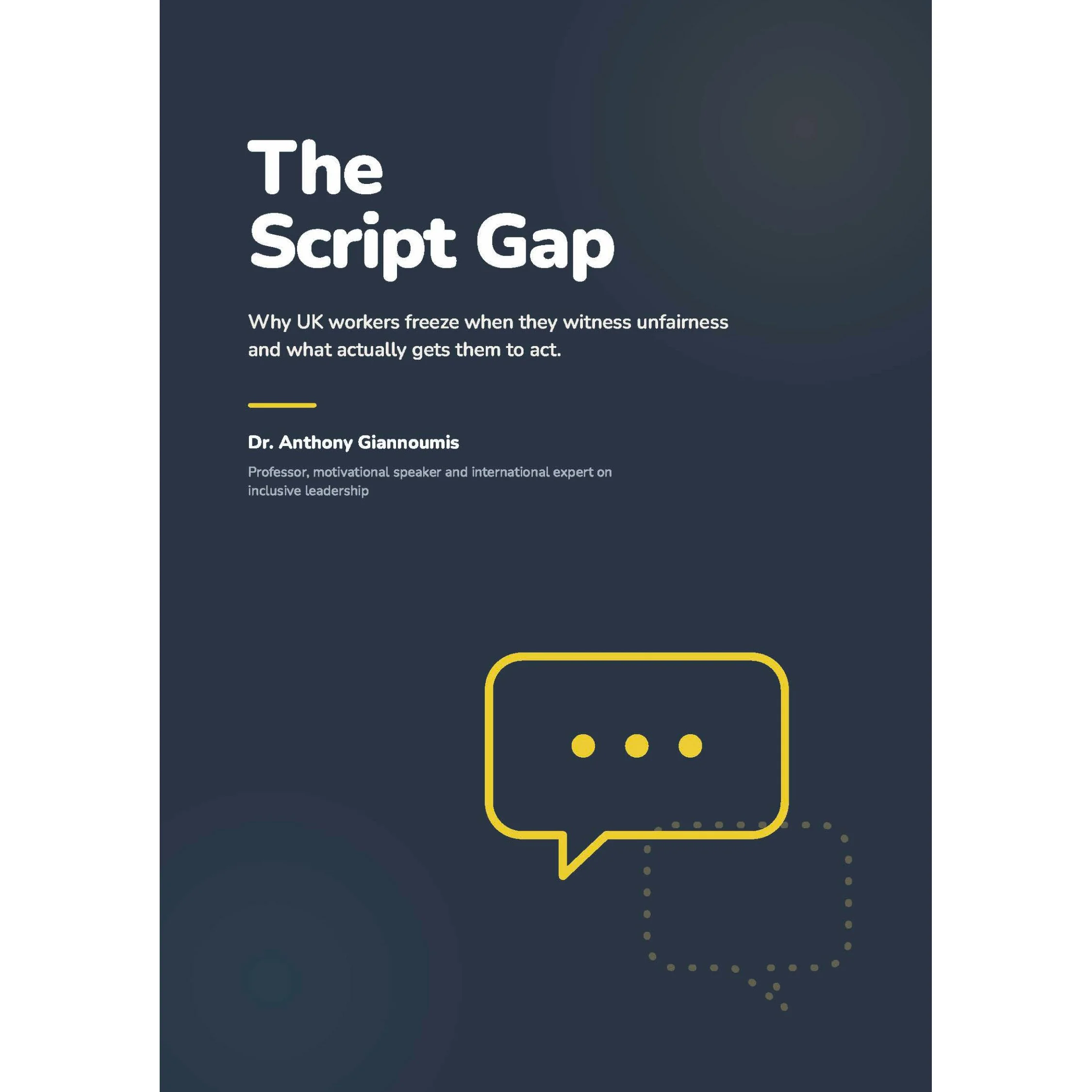
Most people who witness unfairness at work don't stay silent. They freeze, then deal with it privately, after the moment has passed.
A new UK study by Dr. Anthony Giannoumis, fielded through Norstat's panel of 780 working adults. The headline finding is uncomfortable for most training budgets. What predicts whether someone speaks up isn't how much they care. It's whether they walked in already knowing what to say. People with a concrete response acted 85% of the time. People without one, 27%.
What's inside:
Why the bystander problem is narrower than HR assumes, it sits with the one in four who freeze
Why capability, not values, divides those who act from those who stall
The three conditions workers say matter more than training
If you measure allyship by asking whether people support fairness, you're measuring the wrong thing.
Most people who witness unfairness at work don't stay silent. They freeze, then deal with it privately, after the moment has passed.
A new UK study by Dr. Anthony Giannoumis, fielded through Norstat's panel of 780 working adults. The headline finding is uncomfortable for most training budgets. What predicts whether someone speaks up isn't how much they care. It's whether they walked in already knowing what to say. People with a concrete response acted 85% of the time. People without one, 27%.
What's inside:
Why the bystander problem is narrower than HR assumes, it sits with the one in four who freeze
Why capability, not values, divides those who act from those who stall
The three conditions workers say matter more than training
If you measure allyship by asking whether people support fairness, you're measuring the wrong thing.